
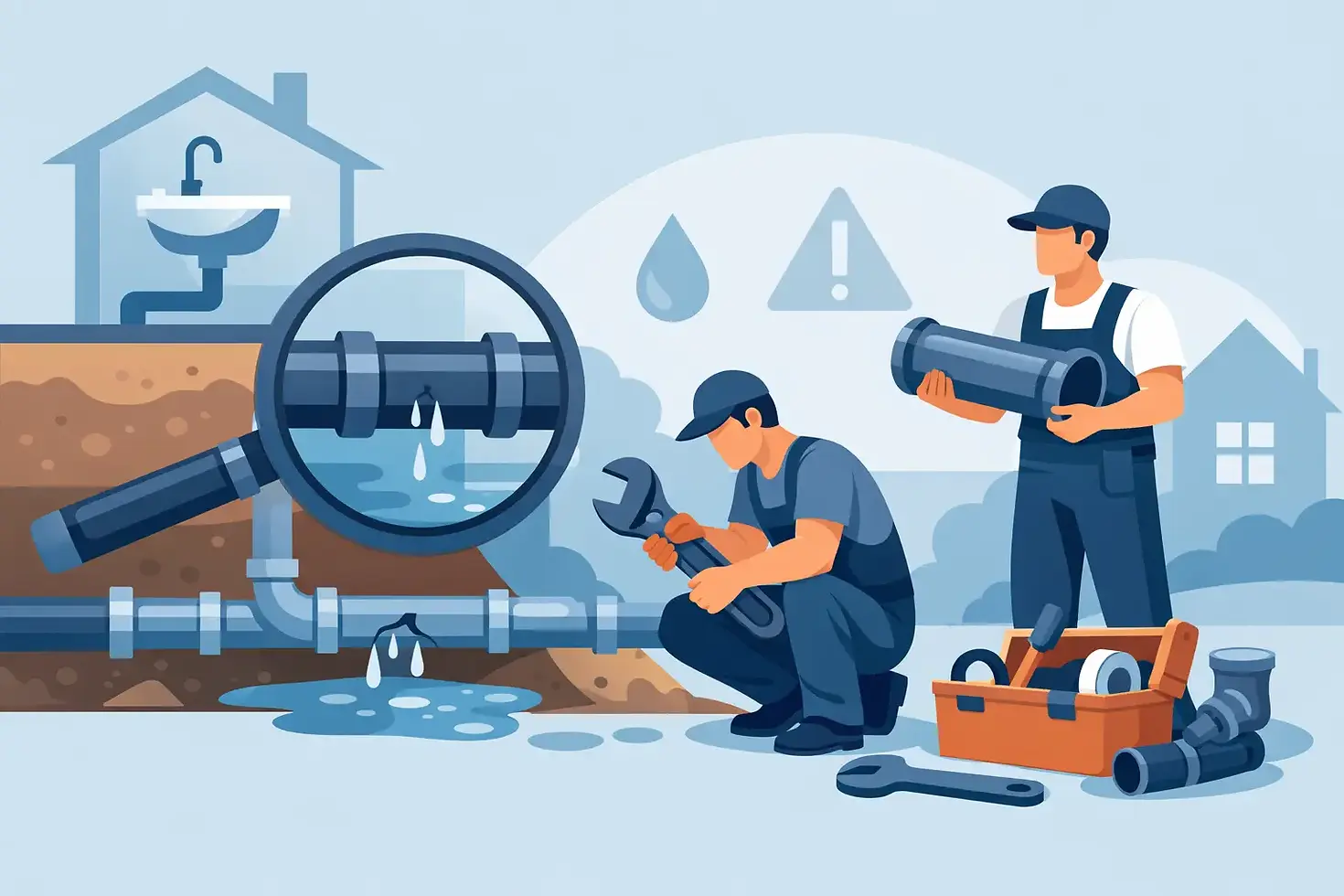
When to Call Drain Pipe Repair Specialists
A drain problem rarely stays small for long. What starts as a slow sink, a bad smell outside, or a patch of damp near a gully can quickly turn into internal disruption, property damage, or a site that cannot operate properly. That is why drain pipe repair specialists are brought in not just to fix visible damage, but to identify the real fault, repair it properly, and prevent the same issue returning.
For homeowners, that usually means protecting the property and getting life back to normal. For landlords, facilities teams, and contractors, it is also about minimising downtime, meeting responsibilities, and avoiding repeat call-outs. In all cases, the right repair approach depends on what has failed, where the defect sits, and how urgently the drainage system needs to be restored.
What drain pipe repair specialists actually do
Drainage faults are not always obvious from the surface. A blocked toilet or overflowing inspection chamber may point to a local obstruction, but it can also be a sign of a cracked pipe, displaced joint, root ingress, scale build-up, or a section of drain that has partially collapsed.
Drain pipe repair specialists deal with that full picture. The first job is to establish whether the issue is a blockage, a structural defect, or both. That usually involves a practical assessment on site, followed by specialist equipment where needed, such as CCTV drainage surveys to inspect the line internally and locate the fault accurately.
Once the problem has been identified, the repair can be matched to the condition of the pipe. In some cases, a localised repair is enough. In others, the damage is too extensive, the pipe material is too poor, or the line has failed in a way that makes replacement the safer long-term option.
Signs a drain pipe may need repair rather than unblocking
Some drainage issues can be cleared and resolved in one visit. Others keep coming back because the blockage is only the symptom. If the same drain repeatedly backs up, there is often an underlying defect that needs proper attention.
Persistent foul odours are one warning sign, particularly if cleaning and unblocking do not remove them for long. Damp patches near external drainage runs, subsidence around inspection chambers, slow-flowing waste across multiple fixtures, and gurgling sounds from pipework can also point to damage below ground.
On commercial sites, the warning signs are often operational. Toilets that frequently go out of use, recurring standing water in service yards, and repeated maintenance visits for the same line usually suggest a repair issue rather than a simple blockage. Construction sites and redevelopment projects can also expose existing drainage defects that were not obvious beforehand.
Why accurate diagnosis matters
Good drainage repair starts with evidence. Guesswork leads to wasted time, unnecessary excavation, and repairs that do not deal with the root cause.
A CCTV survey gives a clear view of the inside of the pipe and helps confirm the exact nature of the defect. That could be a fracture, deformation, open joint, root ingress, displaced section, or a build-up severe enough to damage flow over time. It also helps establish the location and depth of the problem, which matters when access is difficult or the drain runs beneath paving, landscaped areas, roads, or occupied buildings.
For customers, this makes the repair process more transparent. You are not being asked to approve work based on assumption. You are being shown what has failed and why a particular remedy is being recommended.
Repair or replacement - it depends on the defect
Not every damaged drain needs to be dug up and replaced. Equally, not every pipe is a good candidate for patch repair or relining. The right decision depends on the pipe condition, the extent of damage, the age of the system, and the operational demands on the site.
Localised repairs
If the defect is limited to one area, a targeted repair may be the most efficient option. That can work well for isolated cracks, joint failures, or a short section affected by root ingress. The benefit is obvious - less disruption, lower reinstatement costs, and a faster return to service.
However, local repairs only make sense if the surrounding pipework is still in serviceable condition. If the rest of the run is heavily worn or there are multiple defects along the same line, a small repair may only postpone further work.
Relining and trenchless methods
In suitable situations, trenchless repair methods can restore a pipe with minimal excavation. This can be particularly useful where access is restricted or where avoiding disruption is a priority, such as beneath driveways, car parks, landscaped areas, or busy commercial premises.
That said, trenchless methods are not universal. If a pipe has fully collapsed, has significant deformation, or has lost line and level, a no-dig option may not provide a reliable outcome. A proper inspection is what determines whether this route is appropriate.
Excavation and replacement
Where a drain has collapsed, shifted badly, or deteriorated beyond repair, excavation and replacement is often the right answer. It is more disruptive in the short term, but it provides a dependable long-term result when structural failure is too severe for other methods.
This is where experience matters. Excavation work needs to be planned safely, carried out efficiently, and completed with proper reinstatement. For commercial and contractor clients, it also needs to fit around site operations, access requirements, and programme pressures.
The cost of leaving pipe defects untreated
A damaged drain does not simply affect drainage performance. Over time, it can undermine nearby ground, allow wastewater to escape, create hygiene risks, attract pests, and contribute to internal damp or external flooding. What begins as a manageable repair can become a much larger problem if left to worsen.
For homeowners, that may mean damage to gardens, driveways, floors, or walls. For businesses, it can mean service disruption, complaints, unusable facilities, and avoidable maintenance spend. For landlords and managing agents, unresolved drainage defects can quickly become tenant issues that demand urgent action.
There is also the question of repeated call-outs. If a line is being unblocked again and again without investigating why, costs can stack up while the underlying defect remains in place. A proper survey and repair plan is often the more economical route.
What to expect from a professional drainage repair service
A dependable repair service should be clear from the start. That means a prompt response, a practical assessment, an honest explanation of the issue, and a repair recommendation based on the actual condition of the drain.
Customers should also expect qualified engineers, the right equipment for both diagnosis and repair, and a safe method of working on site. In drainage, speed matters, but so does workmanship. A quick fix that fails under normal use is not a saving.
For many clients across Greater London, that also means dealing with a provider who can manage the full process rather than just one part of it. If the same team can investigate, clear the line where needed, carry out the repair, and advise on preventative maintenance, the job is usually smoother and easier to control. That practical, end-to-end approach is one reason companies such as Burch Drainage Ltd are brought in for both emergency faults and planned drainage works.
Drain pipe repair specialists for homes, sites and commercial property
The repair requirement is not the same in every setting. In a house, the priority may be restoring toilets, sinks, and external drains with as little disruption as possible. In a block, school, office, retail unit, or industrial site, the priority may be maintaining safe operation, protecting occupants, and keeping facilities available.
Construction and development work adds another layer. Existing drainage may need repair before new works proceed, defects may be identified during surveys, or damaged assets may need urgent attention to keep a programme moving. In these cases, drainage support needs to be practical, responsive, and used to working alongside other trades and site controls.
That is why specialist experience counts. Drainage is not one-size-fits-all, and the best repair decisions are made by engineers who understand both the technical condition of the pipework and the operational needs around it.
When to make the call
If a drain is backing up repeatedly, smells persist, water is surfacing where it should not, or a survey has already shown structural defects, it is time to stop treating the issue as routine maintenance. A damaged drain usually gets worse, not better, and early action gives you more repair options.
The sensible next step is a proper assessment by engineers who can investigate the line, explain the fault clearly, and carry out the repair work to the right standard. When drainage problems are handled properly at the source, the result is not just a cleared pipe, but a system you can rely on again.


Comments