
When Does Drain Pipe Descaling Make Sense?
- Aug 4
- 5 min read
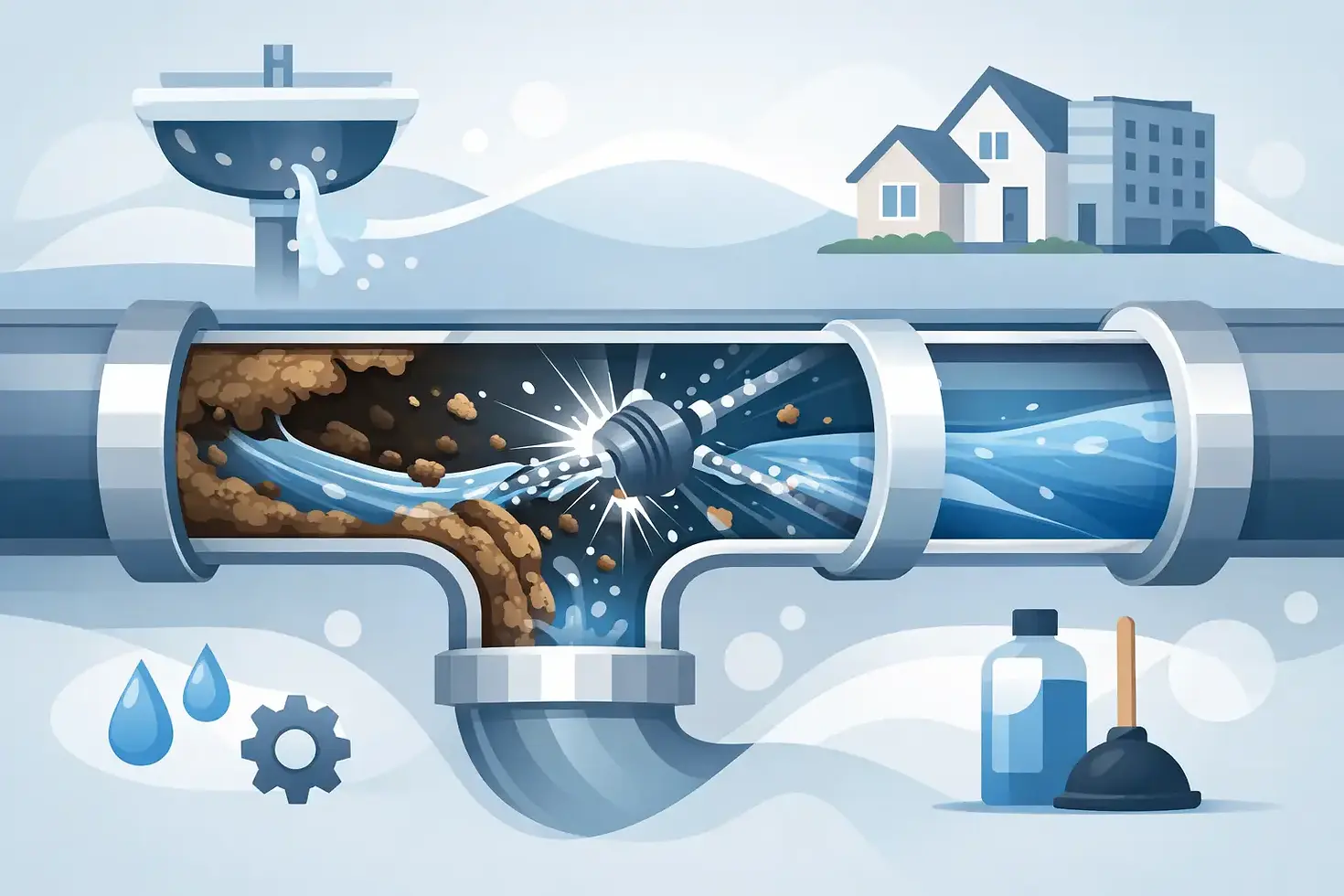
A drain can appear to be clear after an unblocking call-out, yet still suffer from poor flow, recurring build-up and reduced capacity. In many older properties and busy commercial premises, the cause is not a single obstruction but a hard lining inside the pipe. Drain pipe descaling removes that lining, helping the drainage system carry waste and water away as intended.
Scale does not disappear with ordinary drain cleaners or a quick flush of water. It needs the right equipment, a controlled cleaning method and, where necessary, a camera survey to confirm the condition of the pipe before and after work. For London homeowners, facilities managers and contractors, descaling is often a practical way to extend the working life of existing drainage without moving straight to excavation or replacement.
What is drain pipe descaling?
Drain pipe descaling is the mechanical removal of hardened deposits from the internal walls of a drain or soil pipe. These deposits can include limescale, uric scale, mineral residue, soap deposits and compacted waste. Over time, they narrow the pipe bore and leave a rough surface that catches toilet paper, grease and other debris.
The result is a drain that blocks more easily, even when there is no obvious fault from ground level. In cast iron systems, which are common in older buildings, scale can become particularly severe. It may form a thick, uneven layer that significantly restricts flow and masks the true condition of the pipe underneath.
Descaling is not the same as standard drain unblocking. Unblocking removes the immediate obstruction. Descaling addresses the material that makes repeated blockages more likely. The two services are often carried out together, particularly where a drain has a history of backing up.
Signs your pipe may need descaling
Slow drainage alone does not automatically mean scale is present. A local blockage, damaged pipe, poor pipe gradient or tree root ingress can cause similar symptoms. However, descaling should be considered where the same symptoms return after conventional cleaning.
Common signs include toilets that flush sluggishly, foul odours from soil pipes, frequent blockages in the same line and gurgling from basins or gullies. Commercial washrooms may experience repeated toilet blockages despite regular cleaning, while restaurants and other food premises can see reduced flow where grease and mineral deposits combine.
A CCTV drainage survey provides the clearest answer. The camera allows an engineer to inspect the internal pipe wall, identify the type and extent of the build-up, and check whether the pipe is sound enough for cleaning. This matters because a heavily scaled pipe can also have corrosion, displaced joints or cracking that requires a different solution.
How professional descaling works
The appropriate method depends on the pipe material, diameter, access points and condition of the drainage run. A professional engineer will first establish where the issue sits and whether the line is safe to clean. For inaccessible or complex systems, this typically begins with CCTV inspection.
Mechanical cleaning tools are then introduced through a suitable access point. These can break down and remove hardened deposits without unnecessary disturbance to the property. High-pressure water jetting may also be used to clear loosened material and wash the pipe through, restoring a smoother internal surface.
The aim is not simply to force a channel through the scale. Partial cleaning can leave rough deposits behind, allowing waste to collect again quickly. A thorough job removes as much build-up as the pipe condition safely allows, then confirms improved flow and checks the result with CCTV where required.
On larger commercial sites, the work may need to be planned around operating hours, customer access, hygiene controls and waste handling requirements. A properly equipped drainage team can manage the cleaning process safely while minimising disruption to tenants, staff or site operations.
Why a CCTV check matters
Descaling should never be treated as a one-size-fits-all job. If the pipe has become thin, fractured or severely corroded, aggressive cleaning may not be appropriate. The right approach could be a local repair, lining or pipe replacement instead.
A camera survey avoids guesswork. It shows whether deposits are the main problem, whether there is damage behind them, and whether there are additional issues such as root ingress or a displaced connection. It also provides useful evidence for property managers, landlords and contractors planning remedial works.
Which pipes are most affected?
Scale can affect many types of drainage, but soil pipes and internal waste lines are common problem areas. Urinal systems are especially prone to uric scale, which forms a hard deposit that can gradually close off the pipe. Toilets, communal stacks and older cast iron pipes can also develop substantial internal build-up.
Hard-water areas can experience increased mineral deposits, although scale is rarely caused by water hardness alone. Usage patterns matter. A lightly used toilet may allow waste to settle, while a heavily used commercial washroom creates a constant mix of paper, cleaning products and mineral residue. Kitchens face a different issue, where fats, oils and grease combine with food debris to create stubborn restrictions.
The age of the system is another factor. Older pipes often have rougher internal surfaces, corrosion or imperfect joints that encourage deposits to take hold. That does not mean replacement is always necessary. Descaling may restore usable capacity if the structure of the pipe remains sound.
What descaling can and cannot fix
Drain pipe descaling can improve flow, reduce repeat blockages and remove odours linked to trapped organic matter. It can also make planned maintenance more effective by leaving less rough material for debris to catch on. For a building with a fundamentally sound drainage system, it can be a cost-effective alternative to more invasive work.
It cannot repair a collapsed drain, correct an incorrect pipe gradient or permanently solve root ingress. It also cannot reverse serious corrosion where the pipe wall has deteriorated beyond a safe condition. In those cases, cleaning may reveal the need for repair rather than remove it.
This is why a clear diagnosis matters more than choosing the fastest-sounding treatment. A drain that repeatedly blocks after jetting needs investigation, not endless repeat call-outs. The right scope of work should be based on what is actually happening inside the pipe.
Descaling for homes, commercial premises and construction sites
For homeowners, descaling is often considered after recurring toilet or external drain blockages. It is particularly useful in period properties where original pipework remains in service. If a property is being renovated, a survey and clean can also help identify hidden drainage issues before new kitchens, bathrooms or flooring are installed.
For property managers and facilities teams, planned descaling can reduce emergency disruption in shared buildings, offices, schools, hospitality venues and retail premises. Repeated washroom closures affect tenants, staff and customers. Addressing scale before the line becomes fully restricted is usually easier to schedule and manage.
Construction and refurbishment projects benefit from drainage checks where existing services will be retained. A scaled pipe may not cope with increased demand once a building is extended or converted. Establishing condition early helps contractors make informed decisions before handover deadlines become tight.
Preventing scale from building up again
No cleaning method can prevent future deposits if the underlying causes remain. Good daily use and planned maintenance both make a difference. Wipes, sanitary products, cotton buds and cooking fats should never enter the drainage system, regardless of what packaging may claim. These materials readily snag on rough pipe surfaces and create a new blockage.
In commercial settings, regular cleaning schedules should reflect the building's actual use rather than a generic timetable. High-use washrooms, food preparation areas and older properties may need more frequent inspection than a low-occupancy office. Where scale has already caused disruption, follow-up CCTV checks can confirm whether the line remains clear and structurally sound.
Burch Drainage Ltd provides investigation, cleaning and repair support across Greater London, so the work can be matched to the condition of the system rather than limited to a temporary clearance.
If a drain keeps blocking in the same place, treat that pattern as useful evidence. A professional inspection can establish whether descaling is the sensible next step or whether the pipe needs a more permanent repair.


Comments