

7 Best Practices for Liquid Waste Removal
A full interceptor, flooded cesspit or overflowing grease trap can stop a site from operating within minutes. Following best practices for liquid waste removal protects staff, customers, property and the environment, while helping homeowners, facilities teams and contractors avoid avoidable disruption, clean-up costs and compliance problems.
Liquid waste removal is not simply a matter of sending a tanker to site. The waste must be identified, contained safely, collected with the right equipment, documented correctly and taken to an authorised disposal route. The right approach depends on the waste stream, the site layout, access conditions and whether the issue is planned or urgent.
Identify the waste before arranging removal
The first priority is understanding what is in the tank, pit, interceptor or drainage system. Common liquid waste streams include sewage, trade effluent, oily water, silt-laden water, grease-trap waste, contaminated wash water and leachate. These materials do not all have the same handling or disposal requirements.
Do not assume that a waste is non-hazardous because it looks like ordinary dirty water. Chemicals from cleaning processes, oils, fuels, solvents, paint residues or construction activity can alter its classification. A clear description of the source, likely contents, volume and any substances used on site allows the removal contractor to plan the collection safely and select an appropriate disposal facility.
For commercial and construction sites, keep process information available for the person booking the work. This is particularly useful where tanks receive waste from several sources or where site activities have changed since the previous collection.
Keep liquid waste contained and accessible
Many collection problems begin long before the tanker arrives. Damaged covers, overflowing chambers, blocked inlet pipes and poor access can turn a routine emptying job into an urgent incident. Inspect storage areas regularly and act before the waste reaches a critical level.
Covers and access points should be secure, visible and suitable for the location. Tanker crews need safe working space, a clear route for hoses and enough room to position the vehicle without blocking essential access or creating risk to pedestrians. On busy commercial premises, this may mean scheduling collections outside peak delivery or customer hours.
Separating waste streams is equally important. Mixing oily waste with sewage, or chemical washings with general site water, can increase disposal costs and restrict the available treatment routes. Good housekeeping at source often makes waste removal faster, safer and more economical.
Use a competent, licensed collection service
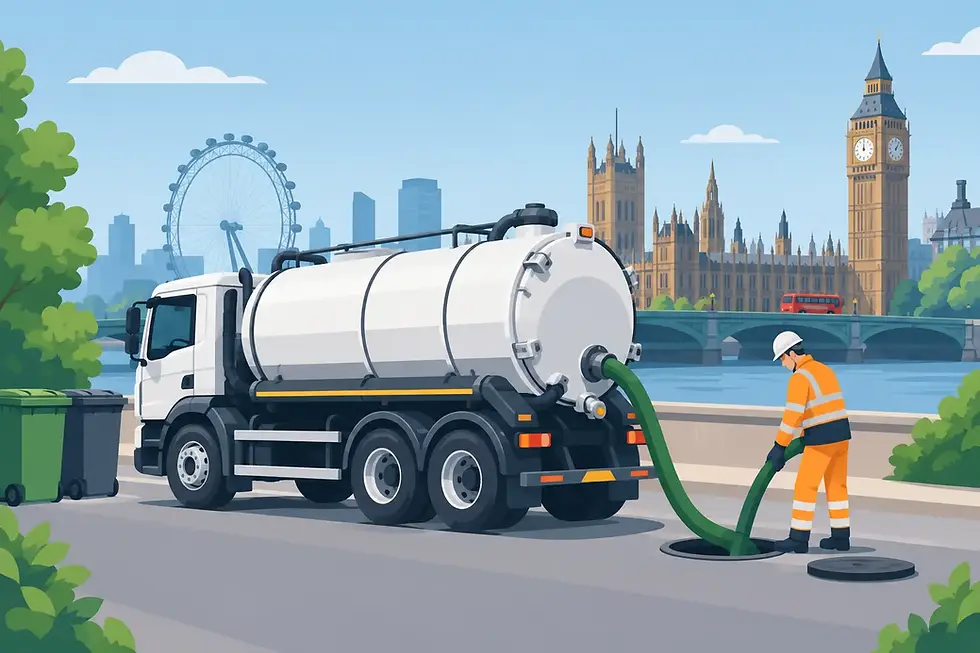
Liquid waste collection involves more than pumping. The crew must be equipped to manage hoses, traffic movements, confined-space risks, spill control and the specific properties of the material being removed. A properly maintained vacuum tanker and trained operatives are essential, particularly where access is tight or waste has built up in difficult chambers.
Before booking, confirm that the contractor can handle the type and volume of waste involved and that the collection will be taken through the correct authorised route. Ask what information they need in advance, whether a site visit is required and how they will manage access restrictions. For larger or recurring jobs, agreeing the practical details beforehand prevents delays on collection day.
For emergency work, speed matters, but it should not replace control. If there is an overflow, isolate the area where safe to do so, keep people away from contaminated water and prevent it entering surface-water drains where possible. Avoid attempting to pump, dilute or move an unknown substance without suitable equipment and advice.
Follow best practices for liquid waste removal paperwork
Documentation is part of responsible waste management, not an administrative extra. The producer of the waste has a duty to make sure it is described accurately and passed to an authorised person. Records provide an audit trail showing what was removed, where it came from, who collected it and where it was taken.
The paperwork required will depend on the waste classification and collection arrangement. For example, waste transfer documentation, consignment information and supporting descriptions may apply in different circumstances. Keep records organised and make them available to the relevant site manager, facilities team or project lead.
Accurate records also help with budgeting and maintenance planning. Repeated collections of unexpectedly high volumes can point to a leaking water supply, excessive grease entering the drainage system, a faulty interceptor or a process problem that needs attention. Treat those patterns as operational information, not just a disposal bill.
Plan collections around capacity, weather and operations
Reactive tanker call-outs are sometimes unavoidable, especially after flooding, blockages or equipment failure. However, planned emptying is generally safer and more cost-effective than waiting for a tank or interceptor to overflow.
Set collection frequencies according to actual use rather than a fixed calendar alone. A small domestic sewage tank, a restaurant grease trap, a busy industrial yard and a construction-site settlement tank will fill at very different rates. Early monitoring may be needed to establish a realistic schedule, then that schedule should be reviewed when occupancy, trading hours or site activities change.
Weather also affects capacity. Heavy rainfall can overwhelm drainage systems, increase contaminated runoff and make access difficult. Sites with interceptors, pumping stations, gullies or below-ground tanks should check levels before periods of forecast severe weather, especially where there is a history of flooding.
For construction projects, waste management should be considered before work starts. Identify where washout, silt, groundwater and welfare waste will be contained, how tankers will enter and leave the site, and who has authority to arrange removal. Leaving these decisions until the first tank is full usually causes unnecessary downtime.
Protect people during pumping and cleaning
Liquid waste work presents practical hazards, including slips, biological contamination, moving vehicles, pressurised hoses and open chambers. A professional crew will assess the job before starting, establish a safe work area and use the necessary protective equipment.
Site representatives also have a role. Tell the crew about known hazards such as overhead restrictions, weak covers, restricted turning space, underground services, public access or chemical storage nearby. Keep children, customers and unauthorised staff clear of the work area. If the collection point is inside a building or service yard, make arrangements to protect floors, doorways and vehicle routes.
Never enter a tank, manhole or enclosed chamber to inspect or clear waste unless a properly controlled confined-space system is in place. Toxic gases and low oxygen levels can develop without warning. This is specialist work and should not be treated as a routine maintenance task.
Deal with the cause, not only the contents
Emptying a tank resolves the immediate capacity issue, but it may not fix why it filled, overflowed or became contaminated. A grease trap that needs emptying too frequently may be receiving excessive fats, oils and food solids. An interceptor full of silt may indicate poor site drainage controls. Recurrent sewage backups can point to a blockage, damaged pipework, root ingress or a pump fault.
Where repeat problems occur, combine waste removal with an inspection and maintenance plan. CCTV drainage surveys can identify defects below ground, while drain cleaning, interceptor maintenance and repairs can reduce the likelihood of another emergency. The correct solution depends on the condition of the system and the source of the waste, so a site-specific assessment is more useful than repeated short-term call-outs.
A practical check before the tanker arrives
For planned collections, make sure the access point is known, unlocked and unobstructed. Confirm the waste source and estimated volume, provide any relevant site induction information, and advise the crew of hazards or operational restrictions. Check that a responsible person can authorise the work and receive the collection records.
If a spill or overflow has already occurred, explain where the liquid has travelled and whether it has reached drains, soil, internal areas or neighbouring property. This helps the contractor bring suitable equipment and decide whether additional cleaning, drain clearance or containment measures are needed.
For dependable planned and emergency support across Greater London, Burch Drainage Ltd can provide vacuum tanker services alongside drainage cleaning, surveys and repair work where the underlying system also needs attention. The most useful time to arrange a collection is before capacity becomes a problem, when the work can be planned around your site and completed with the right controls in place.


Comments