
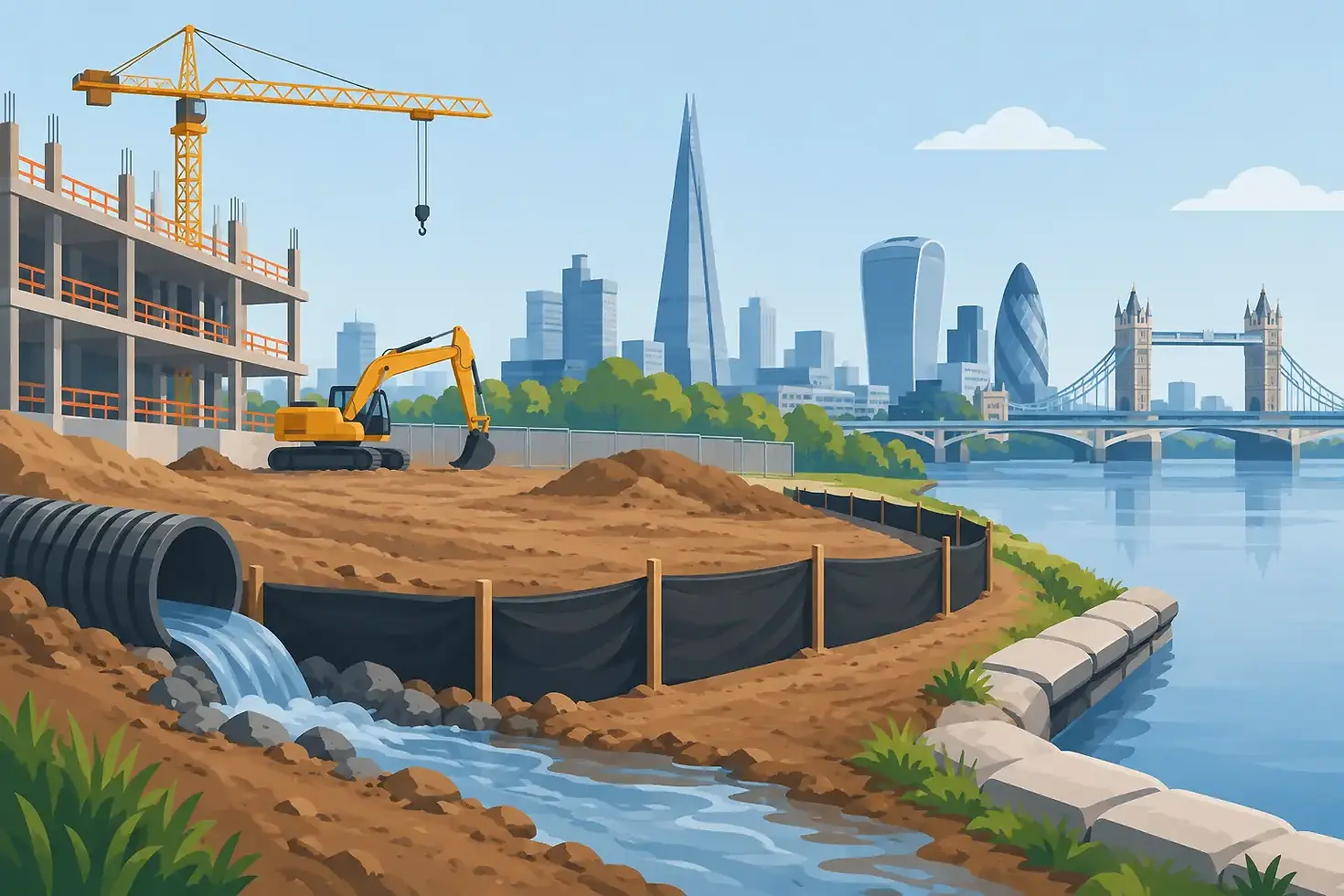
Managing Construction Runoff on London Sites
A short spell of rain can turn an unprepared excavation, stockpile or wheel-wash area into a pollution incident. Managing construction runoff is not simply a matter of keeping a site tidy. It protects surface water drains, local watercourses, neighbouring property and the construction programme, while reducing the risk of blocked drainage, enforcement action and expensive clean-up work.
On busy Greater London sites, the challenge is often compounded by limited space, hardstanding, shared access routes and old or poorly mapped drainage. Water does not need a large opening to carry silt, cement washout, fuel or litter into the network. A practical runoff plan must therefore be in place before groundworks begin and reviewed as site conditions change.
Start with the drainage layout, not the rainfall
The first job is to establish where water can leave the site. This means identifying gullies, channels, manholes, soakaways, outfalls and any connections to public sewers. Do not assume every drain is a foul drain or that all covers serve the same system. Surface water and foul drainage should be kept separate, and a mistaken connection can send contaminated water directly to a watercourse or cause a sewage system to surcharge.
A drainage survey is particularly valuable where records are incomplete, redevelopment is planned or the site has been altered over time. CCTV drainage surveys can confirm pipe routes, identify defects and show whether sediment has already built up in the system. This gives the site team a workable baseline rather than relying on assumptions made from old drawings.
The assessment should also look beyond the site boundary. Consider the gradient of access roads, neighbouring basements, nearby gullies and low points where runoff may collect. A site may appear contained until heavy rain sends water through a gate, across a pavement or into a neighbouring property.
Separate clean water from dirty water
The most effective approach is simple: keep clean rainwater clean, and control water that has come into contact with construction activities. Roof runoff or water from an uncontaminated area may need only controlled drainage. Water passing through exposed soil, aggregate, concrete works, plant areas or haul roads requires more attention.
This separation reduces the volume that needs treatment. It can also prevent settlement tanks and silt controls from being overwhelmed during rainfall. Where possible, direct clean water around work areas using temporary channels, kerbs, bunds or managed falls. Keep stockpiles, skips and material storage away from drainage inlets and route dirty areas towards suitable settlement or collection points.
Concrete and mortar require particularly careful control. Cementitious washout is highly alkaline and must never be allowed into a surface water drain. Provide a clearly marked washout area with contained, impermeable surfaces, and make sure operatives know where it is before the first delivery or pour. The same principle applies to paint, slurry, adhesives, fuels and cleaning chemicals.
Controls that work in real site conditions
A runoff control measure is only useful if it suits the work being carried out and can be inspected easily. Inlet protection, silt fencing, settlement tanks, straw bales, filter socks and temporary bunding all have a role, but none is a substitute for good housekeeping. Selecting controls should be based on the site layout, soil type, expected water volume and the nature of the contaminants present.
Silt is one of the most common problems. Exposed ground, vehicle movements and stockpiles can produce a significant sediment load, especially after dry periods followed by rain. Use stabilised access routes, limit unnecessary tracking, cover or protect loose material, and maintain wheel-cleaning arrangements that do not simply transfer muddy water into a gully.
For larger works, a staged treatment arrangement may be required. Water can pass through a settlement area before entering further filtration or being removed by tanker. The detail depends on the discharge route and local requirements, but the principle is consistent: allow solids to settle, prevent contaminated water from entering the drainage system and remove collected waste through an appropriate route.
Do not overlook temporary drainage
Temporary drainage is often treated as a minor enabling item, then becomes critical when the weather changes. It should be designed with the same care as other temporary works. Check that temporary pipework has secure joints, pumps have appropriate capacity and backup arrangements, and discharge points are approved and protected.
Excavations and basements are a common pressure point. Dewatering may be necessary to keep work moving, but pumped water can contain suspended solids or contaminants. Do not discharge it to a drain without understanding where that drain leads and whether treatment, settlement or consent is required. In some cases, collection and removal by vacuum tanker is the safer and more reliable option.
Managing construction runoff through daily checks
Controls fail when they are not maintained. A filter that is full of silt, a damaged silt fence or a blocked gully protector can make matters worse by causing water to back up and find another route. Site inspections should be routine, not reserved for severe weather warnings.
Daily checks should focus on drainage inlets, settlement areas, bunds, storage zones and site entrances. After rainfall, inspect the same areas again and record any action taken. Remove accumulated silt before it reaches a level where it can be washed onward. If water is ponding, identify the reason rather than repeatedly pumping it away - it may indicate a blocked line, poor falls or an inadequate temporary drainage arrangement.
Clear responsibilities matter. The person carrying out the check needs authority to arrange cleaning, stop an unsuitable discharge or escalate a developing issue. Briefing subcontractors is equally important. A well-written environmental plan will not protect the site if the groundworker, delivery driver or concrete contractor does not know where washout, refuelling and drainage controls are located.
Weather planning protects the programme
Runoff management is often viewed as an environmental task, but it is also a programme protection measure. Flooded excavations, blocked gullies and contaminated standing water can halt work, delay inspections and create unsafe access. Reviewing the forecast allows a site to prepare before water is already moving across the ground.
Before expected heavy rain, clear inlet protection, inspect pumps, secure loose materials and check that settlement capacity is available. Pause activities that create a high risk of polluted runoff where practical, such as major earthmoving beside open drainage. After the event, inspect for erosion, silt deposits, damaged barriers and drainage blockages before normal work resumes.
There is always a balance to strike. Over-controlling every part of a small, low-risk site can add unnecessary cost, while minimal controls on a constrained demolition or deep excavation site can create a far greater liability. The correct level of control depends on the risk, not on a one-size-fits-all checklist.
Know when drainage specialists are needed
Some issues cannot be solved by a site operative lifting a cover or adding another sandbag. Repeated flooding, slow drainage, unexplained surcharging, suspected pipe damage and heavy sediment build-up usually need investigation. Jetting and professional drain cleaning can restore flow, while CCTV inspection can identify collapsed pipes, root ingress, construction debris or incorrect connections that are hidden below ground.
For sites generating substantial volumes of silty water, slurry or liquid waste, planned tanker support can prevent storage areas from overflowing and keep works compliant and operational. It is usually more cost-effective to schedule cleaning and waste removal around key phases than to wait for a blockage or spill to disrupt the job.
Burch Drainage Ltd supports construction clients across Greater London with drainage surveys, cleaning, repairs and vacuum tanker services where site runoff has affected the drainage system or needs controlled removal. Early investigation gives contractors more options and avoids decisions being made under pressure during a storm.
Keep records that show control
A clear site record can be as useful as the physical controls themselves. Keep the drainage plan, inspection logs, photographs, maintenance records, waste transfer documentation and details of any incident response together. This creates accountability across the project and helps the next phase team understand what has been installed, cleaned or altered.
Where a concern is identified, record the cause, corrective action and follow-up check. This helps prevent recurring failures and provides evidence that the site has responded responsibly. It also makes handover easier when temporary controls are removed and permanent drainage becomes live.
Good runoff management is rarely complicated. It comes down to knowing where water goes, keeping contaminants out of it, maintaining the controls on site and acting early when the drainage system shows signs of strain. A planned response before the next downpour is far easier to manage than an emergency once dirty water has left the site.


Comments