
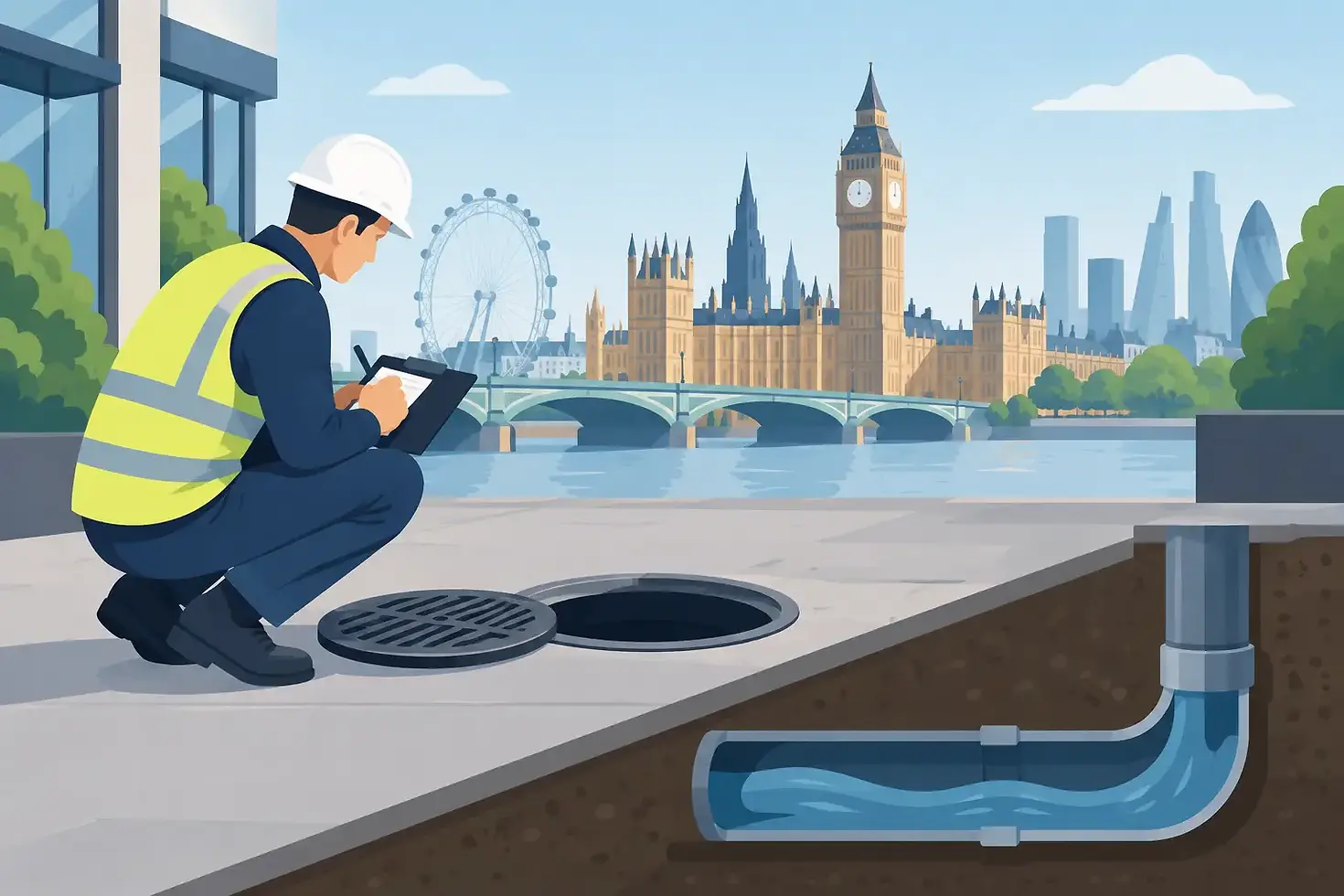
Commercial Drainage Compliance Guide for London
A blocked foul drain behind a restaurant, depot or office can quickly become more than a maintenance issue. It can interrupt trading, create a hygiene risk, cause pollution and leave the responsible business facing avoidable costs. This commercial drainage compliance guide sets out the practical controls commercial property managers, facilities teams and contractors need to keep drainage systems safe, lawful and operational.
Compliance is not a single certificate or annual visit. It is a combination of understanding what runs through your site, controlling what enters the drains, using competent contractors and keeping evidence that problems have been managed properly. The exact requirements depend on the building, its use, the local sewerage network and whether trade effluent or waste is involved.
What commercial drainage compliance means
For most sites, compliance starts with a basic distinction: foul water, surface water and trade effluent must be managed through the correct routes. Foul drainage carries wastewater from toilets, kitchens and washrooms. Surface water comes from roofs, car parks and hardstanding. Trade effluent is liquid waste produced by a business process, such as wash-down water, food production wastewater, vehicle washing discharge or chemical-contaminated liquids.
Mixing these flows, allowing pollutants into surface water drains or discharging unauthorised trade effluent to the public sewer can create serious problems. A drain cover labelled “surface water” may discharge to a watercourse rather than a treatment works. That means oils, detergents, silt, paint, cement washout and food waste can become a pollution incident rather than simply a blocked drain.
Responsibility also matters. A business is generally responsible for private drains and pipework within its boundary, while the sewerage company is responsible for public sewers. However, boundaries are not always obvious, especially on industrial estates, shared premises and older London properties. A CCTV drainage survey and an up-to-date drainage plan provide a far clearer basis for maintenance and emergency decisions.
Key legal and operational duties
The Water Industry Act 1991 restricts discharges to public sewers in certain circumstances, including trade effluent without the appropriate consent. If your operation creates process wastewater rather than ordinary domestic sewage, contact the relevant sewerage undertaker before connecting, altering processes or increasing discharge volumes. Consent conditions can set limits for flow, temperature, pH, fats, oils, solids and chemical content.
Environmental duties extend beyond the sewer connection. Under waste duty of care requirements, businesses must ensure waste is stored, described and transferred safely to an authorised carrier and suitable facility. This is particularly relevant where a tanker removes sewage, interceptor waste, grease trap contents, sludge or contaminated water. Retain the relevant waste transfer documentation and confirm that the contractor is properly licensed for the waste being carried.
For hazardous or unusually contaminated liquids, the classification and paperwork requirements may differ. Do not assume that all liquid waste can be handled as ordinary sewage. A competent drainage contractor can assess the material, arrange suitable removal and advise when specialist disposal routes are required.
Where construction, extensions or drainage alterations are planned, drainage design may also need to meet Building Regulations requirements, planning conditions and local flood-risk or sustainable drainage expectations. On constrained London sites, the practical solution may involve attenuation, flow controls, interceptors, pumping equipment or separate surface water arrangements. Leaving these considerations until work has started can lead to redesign, delay and unnecessary excavation.
Control what enters every drain
The most reliable compliance measure is simple: staff and contractors must know which drains serve foul water and which serve surface water. Clear labelling at gullies, manholes and wash-down areas prevents costly mistakes. It is especially useful on sites with regular deliveries, cleaning teams, fit-out contractors or temporary labour.
Food businesses need particular control over fats, oils and grease. Grease solidifies as it cools, sticks to pipework and traps other debris. Pouring cooking oil, sauces or food solids into sinks or external gullies is a common cause of blockages and sewer misuse. Depending on the size and activity of the premises, a properly sized grease management system, regular emptying and staff procedures may be necessary.
Vehicle yards, workshops and loading areas present different risks. Oil interceptors, silt traps and designated wash-down points may be needed to prevent hydrocarbons, fuel residues and sediment reaching surface water drainage. Interceptors are not fit-and-forget equipment. If they are not inspected and emptied at suitable intervals, they can fail when they are most needed.
For construction sites, make sure cement washout, grout, slurry, paint, adhesives and excavation water are controlled before they reach the drainage network. Even small amounts of cementitious material can harden inside pipework or raise the pH of water entering surface drainage. Site teams should have a clear process for washout, spill response and waste collection from the first day of works.
Build a planned drainage maintenance programme
Reactive call-outs are sometimes unavoidable, but a blockage is rarely the first sign of a problem. Slow drainage, recurring odours, standing water around gullies, grease build-up and repeated toilet backups should trigger investigation before operations are affected.
A planned programme should reflect the site rather than follow a generic timetable. A busy commercial kitchen may need frequent grease and drain cleaning. A warehouse may need regular external gully clearance before autumn leaf fall. A vehicle depot may need interceptor inspections after periods of heavy rain or high wash-down activity. Older buildings with root ingress, displaced joints or scale build-up may require more frequent CCTV monitoring.
Good records are as valuable as the cleaning itself. Keep a site drainage file containing:
drainage plans and known connection points;
CCTV survey reports, images and repair recommendations;
cleaning, jetting, interceptor and grease-management records;
trade effluent consents, where applicable;
waste transfer notes and liquid waste removal documentation.
These records help facilities teams spot repeat failures, support insurance discussions and demonstrate reasonable management if there is a complaint, inspection or pollution concern. They also mean an emergency contractor can work faster, with less disruption and less guesswork.
Choose competent contractors and verify the scope
Commercial drainage work can involve confined spaces, high-pressure water jetting, contaminated waste and live operational areas. Price matters, but it should not be the only decision point. Check that the contractor has appropriate insurance, trained operatives, safe systems of work and the equipment to diagnose as well as clear the fault.
Ask what is included in the work. A basic blockage clearance may restore flow but not identify why the blockage occurred. Where there is a history of repeat problems, a CCTV drainage survey after cleaning can reveal root ingress, cracks, collapsed sections, poor falls or an incorrect connection. The most cost-effective solution may be a targeted repair rather than repeated emergency jetting.
For tanker work and liquid waste removal, confirm the waste type, collection method and disposal documentation before the job begins. If access is restricted, establish whether a two-person crew, traffic management, long hose runs or out-of-hours attendance is required. Clear planning protects site safety and prevents a simple removal job becoming an operational delay.
Burch Drainage Ltd supports Greater London businesses with planned maintenance, CCTV surveys, drain cleaning, repairs and liquid waste removal, providing the practical evidence and specialist support needed to keep drainage responsibilities under control.
What to do when a drainage incident occurs
If sewage is backing up, a drain is overflowing or contaminated water has reached a surface water system, act quickly. Stop the source where it is safe to do so, keep people away from affected areas and prevent further material entering gullies. Do not send staff into chambers, attempt to lift heavy covers without suitable equipment or use chemicals that could worsen the discharge.
Contact a qualified drainage contractor to contain the issue, clear the blockage and assess the cause. If there is a risk of pollution beyond your boundary, notify the relevant authorities and sewerage provider as appropriate. Keep a factual record of what happened, including the time discovered, materials involved, photographs, actions taken and contractor reports.
After the immediate issue is resolved, review the failure. A recurring overflow may point to insufficient cleaning, damaged pipework, poor staff practices or drainage capacity that no longer matches the site’s use. Correcting the underlying cause is the part that protects compliance and prevents the next disruption.
Commercial drainage compliance guide: practical next steps
Start with a clear drainage survey and asset record if you do not already have one. Identify foul, surface water and trade effluent routes, then assess the highest-risk activities on site. From there, put realistic inspection, cleaning and waste-removal intervals in place, with named responsibility for reviewing the records.
Drainage compliance works best when it is treated as part of everyday site management, not an issue reserved for emergencies. A well-maintained system gives your team fewer surprises, your customers a safer environment and your business a stronger position when it needs to demonstrate that the right controls were in place.


Comments