

Best Drainage Checks Before Winter in London
A heavy autumn downpour can expose a drainage fault that has been developing quietly for months. By the time standing water reaches a doorway, toilet backs up or an external gully overflows, the issue is rarely new. The best drainage checks before winter give homeowners, property managers and site teams time to identify defects before colder weather, leaf fall and sustained rainfall turn a manageable problem into an urgent call-out.
For Greater London properties, winter preparation should focus on flow, condition and capacity. Drains need to carry rainwater and wastewater away without restriction, pipework needs to be structurally sound, and gullies and channels need to remain clear when demand is highest. A practical inspection now can reduce the risk of flooding, foul odours, hygiene concerns, property damage and disruption to tenants or trading operations.
Start with gullies, grids and surface water routes
External gullies are designed to collect rainwater from patios, driveways, roofs and paved areas. They are also one of the first places to become blocked by leaves, moss, silt, gravel and general debris. If water is slow to clear after rainfall or sits around a gully, the outlet may already be restricted.
Lift removable grates carefully and check for visible debris near the surface. Clear what can be safely removed, but avoid forcing rods or tools into the pipework without knowing what is below. A compacted blockage further along the run, a damaged gully trap or a collapsed connection will not be resolved by clearing the top few inches.
Commercial premises and managed blocks should also inspect loading bays, bin-store drains, car parks, access roads and basement ramps. These areas often collect silt and litter quickly, and water entering a basement can cause significant operational and insurance issues. Where there is regular vehicle traffic or a history of flooding, planned cleaning before winter is usually more reliable than waiting for the first severe storm.
Check roof drainage before leaves build up
Gutters and downpipes form part of the drainage system, even though they sit above ground. A blocked gutter can overflow against brickwork, saturate soil near the foundations and overload a gully below. In freezing conditions, trapped water can also contribute to damage at joints and brackets.
Look for gutter overflow marks, staining on external walls, dripping from joints and downpipes that discharge slowly. Check that downpipes are securely connected and directed into a suitable gully or surface water system rather than discharging against the building. Do not work at height without the right access equipment and safety measures. For many properties, a safe professional inspection is the sensible option.
It is worth remembering that a clear gutter does not guarantee a clear underground connection. If rainwater backs up at the foot of a downpipe, disappears slowly or causes the gully to overflow, the below-ground pipe may need cleaning or investigation.
Test toilets, sinks and internal waste pipes
Winter drainage checks should not focus solely on rainwater. Foul drainage problems can become more disruptive when properties are closed up, busy over the festive period or operating with reduced maintenance cover.
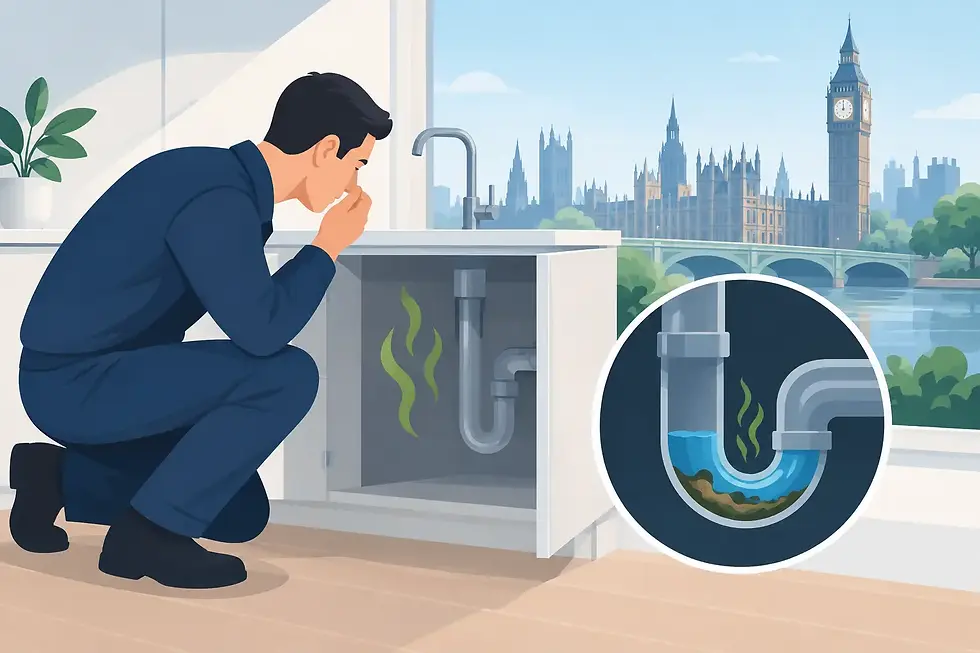
Run water through sinks, baths, showers and toilets and watch for slow drainage, gurgling, bubbling or a change in water level in nearby fittings. These signs can point to a developing restriction in a branch pipe or main drain. Persistent odours from a bathroom, kitchen or utility area may indicate a blockage, dry trap, defective seal or ventilation issue.
Avoid treating repeat problems with chemicals alone. Chemical products may provide a short-term improvement in some cases, but they do not remove heavy grease deposits, tree-root ingress, displaced joints or structural damage. They can also be hazardous to handle and may complicate later drainage work. If the same fixture blocks repeatedly, the cause needs identifying rather than masking.
Look for warning signs around the property
Some of the most useful checks are visual. Walk the external perimeter after rain and note any pooling water, soft ground, unusually lush patches of vegetation, foul smells or damp marks close to drain runs. These can indicate poor surface-water management, leaking pipework or a blockage forcing water to escape elsewhere.
Pay attention to manhole covers as well. Covers should sit securely, be free from obvious cracks and remain accessible. Do not enter a manhole or confined drainage space. If it is safe to lift a domestic inspection cover, look for a high water level, slow movement of flow, visible debris or signs that sewage has risen on the chamber walls. Any of these findings warrant professional attention.
For property managers, access is a key part of winter readiness. Drainage engineers cannot quickly resolve an emergency if chambers are concealed beneath stored materials, landscaping, parked vehicles or fixed decking. Record where inspection chambers and isolation points are located, particularly across larger sites and mixed-use buildings.
When a CCTV drainage survey is the right check
A CCTV drainage survey provides a clear view of the condition inside pipes without unnecessary excavation. It is particularly useful where there are recurring blockages, unexplained flooding, suspected root ingress, old pipework or concerns following building work.
The survey can identify cracks, fractures, displaced joints, scale build-up, root intrusion, collapsed sections and incorrect connections. It also helps establish whether a drain simply needs professional cleaning or requires repair or replacement. That distinction matters before winter: cleaning a pipe with a structural defect may restore flow temporarily, but it will not address the reason it keeps failing.
For commercial and construction clients, survey records can support planned maintenance decisions, clarify responsibility between parties and help target repair budgets. For homeowners, they can provide reassurance before major works or after repeated drainage issues that have not been resolved by basic unblocking.
Plan cleaning around the risks on your site
There is no single cleaning interval that suits every property. A quiet household with modern pipework has different needs from a restaurant, school, warehouse, block of flats or active construction site. The right programme depends on usage, pipe condition, nearby trees, the amount of hardstanding and the consequences of an interruption.
High-pressure drain cleaning can remove accumulated silt, grease, debris and root material from suitable pipework. Vacuum tanker services may be required where gullies, interceptors, pits or tanks contain larger volumes of liquid waste or sediment. The aim is not simply to get water moving on the day. It is to restore usable capacity before winter weather tests the system.
Where works are planned, schedule them before late autumn if possible. Emergency demand can increase during periods of heavy rain and freezing temperatures, while leaf fall can quickly undo a delayed maintenance visit. A planned job gives more scope for survey work, thorough cleaning and repairs without the pressure of an active flood.
Know when to call for professional help
A prompt response is advisable if drains are overflowing, wastewater is backing up, water is entering a building, foul odours are persistent or multiple fixtures are draining slowly at once. These are not issues to leave until after the next storm.
Professional engineers can assess the problem safely, clear blockages with appropriate equipment and investigate the underlying cause where needed. Burch Drainage Ltd supports domestic, commercial and construction clients across Greater London with planned maintenance, drain cleaning, CCTV surveys, repairs and emergency drainage response.
Before winter sets in, treat slow drainage and surface-water pooling as early warnings rather than minor inconveniences. A clear, well-maintained drainage system is one less risk for your property, people and operations when the weather turns.


Comments